December 19, 2025
Why Screen-Time Fights Always Happen Between 5 and 8 PM
(And What Actually Fixes Them)
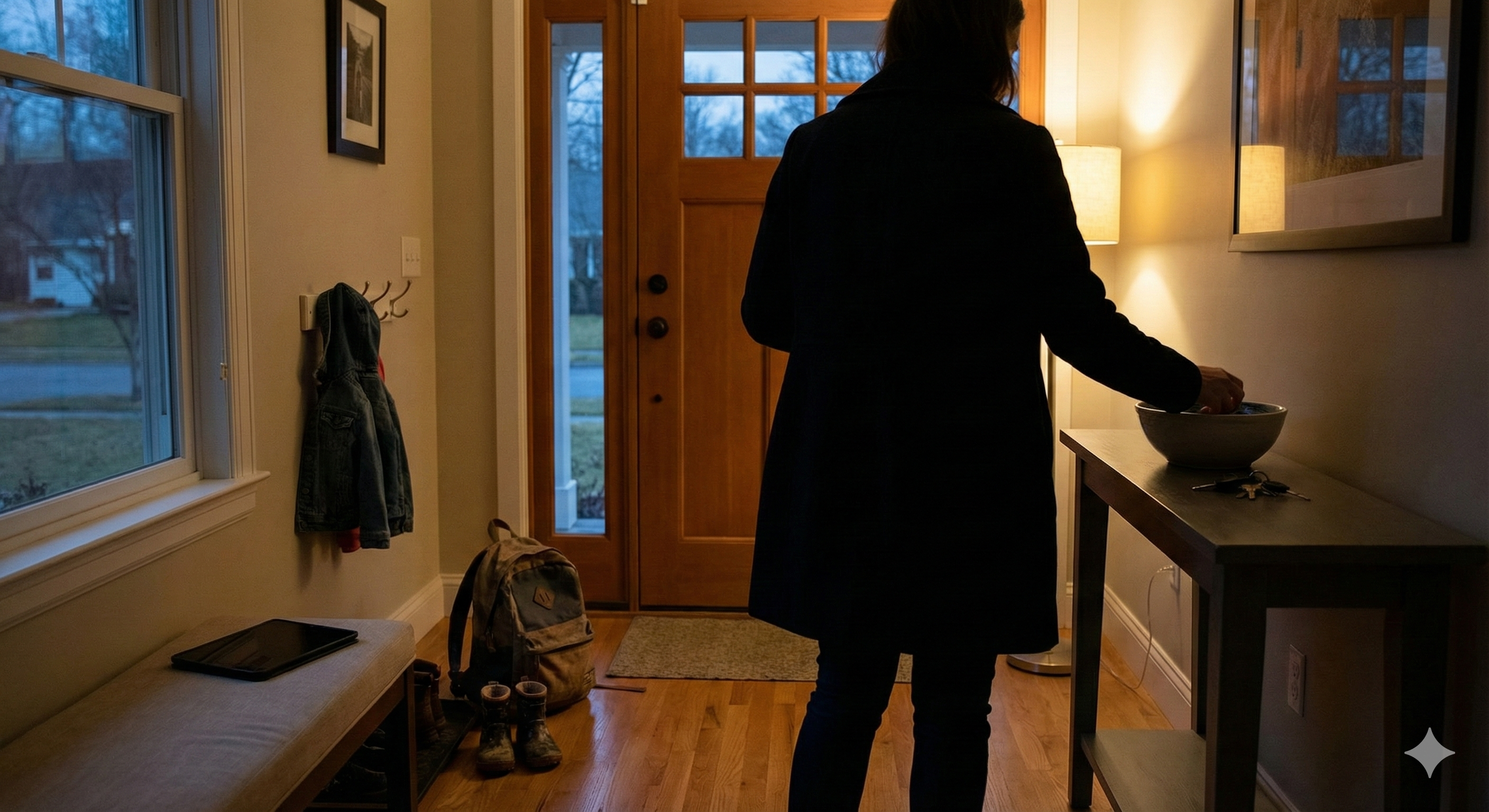
At 6:42 p.m., no one in your house is at their best. Dinner is half-made. Homework is half-done. Someone is hungry, someone is tired, and someone is yelling, “Just five more minutes!” And somehow, screens become the battlefield. If that window of time feels impossible, you’re not imagining it. Most screen-time fights happen between 5 and 8 p.m. — right when everyone’s nervous system is running on fumes. Parents are depleted. Kids are dysregulated. And the smallest limit feels like a personal attack. This isn’t a discipline problem. It’s a design problem.
Why that time of day is so explosive
By early evening, three things collide: Decision fatigue Everyone has made hundreds of micro-decisions already. Brains want autopilot. Low blood sugar + low patience Hunger amplifies emotion. So does exhaustion. Unclear transitions When screens don’t have a predictable “place” in the day, they sneak everywhere. So when a parent suddenly says, “Okay, time’s up,” the brain hears: Threat. Loss. Unfairness. Cue meltdown.
The mistake most parents make
When evenings fall apart, parents usually add more rules: Shorter timers. Louder reminders. Harsher consequences. But rules added in chaos don’t create calm. They create arguments. I know this because I lived it — night after night — until I stopped asking, “How do I control screens better?” And started asking something else.
The shift that changed everything
What finally worked wasn’t stricter limits. It was building a system that didn’t depend on my energy at 7 p.m. Instead of deciding screen rules in the moment, we gave screens a predictable place in the day. A rhythm. A default. When screens had a clear “home” — after dinner, weekends only, shared spaces — the fighting dropped almost immediately. Not because our kids suddenly became compliant. But because their brains could finally relax. This approach became the foundation of what I later wrote about in my book, The Screen Switch — a practical, no-guilt guide for parents who want calmer homes without banning technology or turning into the screen police.
What calm actually looks like
Calm doesn’t mean silence. It means fewer negotiations. It means kids knowing what happens next. It means parents not needing to raise their voice to be heard. And it starts with one truth most parents need to hear: You’re not failing at screen time. You’re parenting in the hardest hours of the day.
If tonight is one of those nights
Take what fits. Ignore the rest. And remember the mantra that runs through The Screen Switch and every system inside it: Progress beats perfection — every single school night. If screen time feels like the loudest fight in your house right now, you’re not alone — and you’re not stuck. Calm isn’t a personality trait. It’s a system.
About the book
The Screen Switch introduces the Family OS — a repeatable, real-life framework that helps families replace screen battles with rhythm, clarity, and connection. No scare tactics. No tech-shaming. Just systems that work when parents are tired, and kids are human.
This post is originally published on annawellsbooks.com. Syndicated copies may appear on Medium.